7 Reasons to Wear a High-Visibility Safety Vest
Protecting your workers from "struck-by" accidents is still the most important thing when you're in charge of workplace safety on building sites, in transportation hubs, or on the road. High-Visibility Safety Vests are an important piece of personal safety equipment. They make workers more visible in dangerous settings by mixing fluorescent fabrics with retroreflective materials. Wearing these jackets makes it much easier to see during morning shifts, night shifts, and bad weather, which greatly lowers the risk of accidents. Not only do modern High-Visibility Safety Vests provide basic protection, but they also make sure that rules are followed, are comfortable, and are a cost-effective option for procurement teams that are in charge of bulk uniform projects. Businesses can choose the right safety gear for their workers that meets legal standards in North American markets and beyond by understanding the technical advantages and practical benefits.
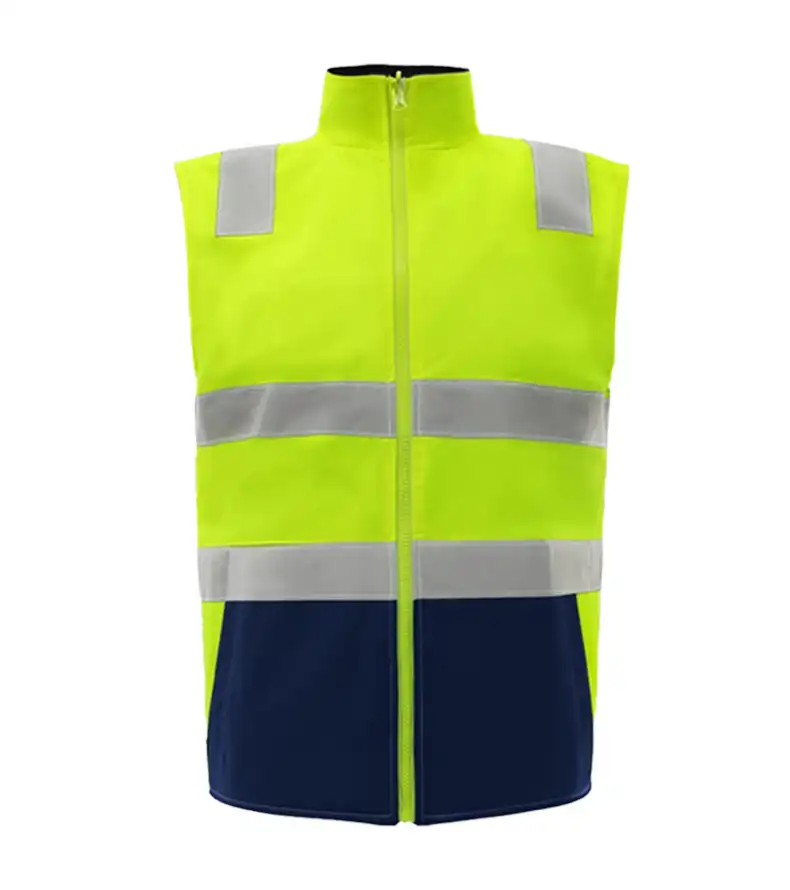
Enhanced Worker Visibility to Prevent Accidents
The Science Behind Visibility Enhancement
Workplace accidents involving moving cars and tools cause a lot of injuries across all industries. High-Visibility Safety Vests have bright background materials that change ultraviolet light into visible colors during the day. These materials are usually lime yellow, orange-red, or safety orange. This photometric feature makes a big difference with common work surfaces like concrete, asphalt, and natural scenery.
Occupational safety schools have found that machine users can see workers three to five seconds earlier when they are wearing compliant visibility gear than when they are wearing regular workwear. Those extra seconds directly avoid accidents, especially on job sites where heavy machinery is used along with people walking. The shape of the vest makes it possible to recognize someone from a distance and from different angles, eliminating blind spots that normal clothes can't fix.
Real-World Impact on Safety Metrics
Companies in the construction industry that use full vision programs say that the number of accidents involving people getting hit drops by 40 to 60 percent in the first year. Bright base colors and carefully placed reflective bands make a shape of a person that equipment users automatically know and avoid. This biomotion principle—showing how the body moves—works especially well when workers bend, reach, or do other tasks that change their shape.
Warehouses that handle high-density storage and factories that use forklifts both benefit from better viewing procedures. Purchasing managers who put worker safety first know that buying the right safety gear cuts down on insurance claims, keeps operations running smoothly, and shows that the company cares about its workers' health.
Compliance with Safety Standards and Regulations
Understanding ANSI/ISEA 107 Classifications
Through ANSI/ISEA 107 guidelines, the American National Standards Institute sets performance requirements. Based on risk rating, High-Visibility Safety Vests are divided into three separate classes. Class 1 vests are best for places with low traffic (speeds under 25 mph) and need to be worn so that workers in parking lots or warehouses can see. Class 2 vests are made for road workers who have to deal with traffic going 25 to 50 miles per hour. They have more bright material and background surface area. For highway repair workers and first responders working near fast-moving traffic, Class 3 is the best visibility level.
Each group specifies the amount of material to use and how it should be placed. High-Visibility Safety Vests. Class 2 jackets must have at least 201 square inches of retroreflective tape and 775 square inches of bright background fabric that can be seen from all sides. These exact measures make sure that the safety is the same no matter who makes or supplies the product.
Meeting OSHA Mandates for Workplace Safety
Through CFR 1926.201 rules, the Occupational Safety and Health Administration requires many businesses to follow visible standards. It is the employer's legal duty to make sure that workers have the right safety gear for the risks on the job site. Companies that don't follow the rules could get fined, with fines reaching thousands of dollars per violation, and could be held responsible in accident probes.
When buying High-Visibility Safety Vests, people in charge of procurement have to check the licensing paperwork to make sure the goods meet the most recent changes to the standards. When clothes are put through photometric testing, certificates of approval from testing labs make sure that they work the way they're supposed to. During safety checks and regulatory reviews, this paperwork is very important. It keeps companies from missing compliance gaps that could put worker safety and the company's reputation at risk.
Material and Design Features Improve Comfort and Functionality
Advanced Fabric Technologies for All-Day Wear
Engineered polyester mesh fabrics that weigh 120 to 150 grams per square meter are used in modern High-Visibility Safety Vests. These fabrics are strong and breathable at the same time. These materials have moisture-wicking features that pull sweat away from the skin. This keeps workers from getting too hot when they have to work long hours in warm places. Technical meshes, unlike heavy cotton-based clothes, keep their shape and color strength even after being washed many times and dry quickly between uses.
Temperature control is especially important for workers in the south or in the summer, when heat-related illnesses are more likely to happen. The open-weave design lets air flow continuously across the chest, which cools the core body temperature by two to three degrees Fahrenheit more than rigid fabrics. This thermal management has a direct effect on safety and efficiency, since workers who are too hot are less aware and more likely to make mistakes.
Practical Design Elements That Support Daily Operations
Basic safety gear can be turned into useful clothing that workers are happy to wear with thoughtful design features. Smartphones, measuring tools, and communication devices can all fit in different bag configurations, so you don't have to buy separate tool packs. Heavy-duty zippers with coatings that prevent corrosion can handle being opened and closed a lot and in all four seasons. Hook-and-loop ends allow for a perfect fit for all body types.
Many types of High-Visibility Safety Vests have breakaway features that keep workers from getting tangled up near conveyor systems, spinning machinery, or car doors. These safety releases work when certain tension loads are met. This lets the clothing come apart easily instead of pulling workers into risky positions. These kinds of engineering features show how current safety gear deals with many risk factors at the same time.
Corporate clothing plans are much more valuable when they can be customized. Companies can put their brands, department names, or safety messages directly on High-Visibility Safety Vests using screen printing and heat transfer options. This branding supports the company's character and makes things more organized on-site, making it easier for supervisors to find team members, contractors, and approved people in busy work areas.
Reflective Components Boost Safety in Low-Light Environments
Retroreflective Technology Explained
High-quality High-Visibility Safety Vests have reflecting strips that use advanced optical technologies to send light back to where it came from. Glass bead retroreflection uses millions of very small spheres that are mixed in with binding resins. Each sphere acts as a tiny lens, directing light that has been reflected back toward car headlights or torches. In perfect conditions, this makes a bright light that can be seen from more than 1,000 feet away.
The microprismatic tape technology is a more advanced option than high-visibility safety vests. It uses precision-molded cube corner shapes that work better at wider angles. These prismatic reflectors keep working even when viewing angles aren't straight on. This is important for workers who have to cross roads or do jobs that require them to change their direction in relation to traffic. Even after years of being outside and being washed in a factory, good reflective materials keep minimum retroreflection coefficients above 330 candelas per lux per square meter.
Color Selection and Visibility Optimization
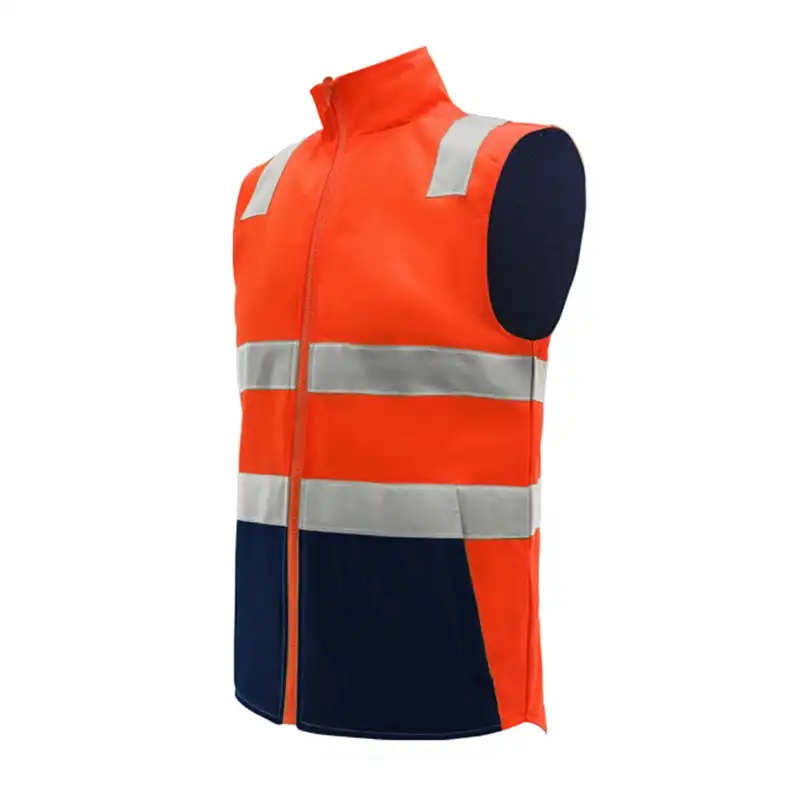
Fluorescent lime yellow is the most popular color in North America because it stands out so well against both natural and man-made backgrounds during the day. This color is best for finding things on building sites with green plants, brown dirt, gray concrete, and blue sky backgrounds. In the winter, when it snows, orange versions are easier to see than yellow ones, which can blend in with tools or building materials in some industrial areas.
Because people's eyes are more sensitive to yellow-green wavelengths, lime High-Visibility Safety Vests look brighter than other colors when the lighting is the same. Because of this physiological edge, machine workers can recognize work zones faster and see more clearly for longer periods of time. Some companies use color-coding to make it easier to see who is in charge of each crew member: supervisors are orange, general workers are yellow, and experts are lime. This makes it easier to see who is in charge of each big project.
Versatility and Suitability Across Different Work Environments
Industry-Specific Applications
High-Visibility Safety Vests for construction sites need to be tough enough to handle dust, wear, and frequent contact with rough materials. Heavy-duty polyester construction with strengthened stitching at stress points makes the clothing last longer while keeping its reflective quality. Maintenance crews that work on roads need Class 3 protection with sleeves that keep workers visible when they raise their arms to wave or move equipment.
Class 1 or Class 2 High-Visibility Safety Vests are lighter and better for logistics and warehouse work because they make workers more visible without adding extra material that could get caught on shelves or palletized goods. These simplified designs make it easy to move around while loading, sorting, and taking inventory, and they keep accidents from happening near forklifts and docks. Ground staff at airports, railways, and utility repair teams all have different visibility issues that can be solved by choosing the right High-Visibility Safety Vests.
Welston is an expert at making High-Visibility Safety Vests that can be used in a wide range of professional and business settings. Our factories in Shenzhen use thirty years of experience in garment engineering to make High-Visibility Safety Vests that work best in business settings, hotel dress programs, and light-duty industrial settings. Instead of heavy construction-grade gear, our focus is still on safety clothes that are comfortable and look professional, meeting compliance requirements without sacrificing company image standards.
Adapting to Climate and Seasonal Demands
Geographic factors have a big impact on choosing High-Visibility Safety Vests for activities that span multiple regions. Companies that have employees all over the United States have to take into account the differences in temperature between the cold winters in the north and the hot summers in the south. In states like Texas, Florida, and Arizona, lightweight mesh High-Visibility Safety Vests are important for summer comfort. In colder states, padded High-Visibility Safety Vests are better for the winter.
Welston can customize its products to meet the needs of different climates by using fabrics that breathe well in the mild weather that is typical in North American markets. Our 10 production lines and 580 employees handle orders ranging from small batches of 100 pieces to large corporate uniform programs. They also handle seasonal changes and the needs of area delivery.
Cost Efficiency and Procurement Benefits of Bulk Ordering
Evaluating Total Cost of Ownership
To make smart buying choices that balance original investment against long-term value, you need to know how long clothes last and how often they need to be replaced. Cheap jackets that cost between $8 and $15 usually last between 6 and 12 months of regular use before they need to be replaced because they are no longer bright or the fabric is worn out. Mid-range choices, which cost between $18 and $28, last 18 to 24 months because they are made with better materials and building methods.
Companies that want their employees to last a long time and follow the rules consistently should buy premium High-Visibility Safety Vests. Even though they cost $35 to $50 each at first, these clothes keep working photometrically for two to three years of daily use and washing them a lot. Because they last longer, they don't need to be replaced as often, which lowers the overall cost of the program and makes it easier for staff to handle supplies and place new orders.
Finding the value by figuring out the cost per wear is more accurate than just looking at the buying price. A $25 High-Visibility Safety Vest that lasts 400 work days costs only $0.0625 per use, while a $12 vest that lasts 180 days costs $0.067 per day. This means that the more expensive choice is actually the better deal, even though it costs more up front. These measures help procurement teams show clients who are watching their budgets why they should spend money on quality.
Strategic Advantages of Volume Purchasing
When you buy in bulk, you can get big cost savings on top of lower unit prices. Most of the time, volume savings start at 100 pieces, and prices get better at 250, 500, and 1,000 units or more. Welston lets you make changes easily, like adding your brand, planning how to distribute the right size, and choosing from different packaging options that work for both central distribution and direct delivery to the job site.
Buying High-Visibility Safety Vests from a single, dependable source streamlines paperwork, lowers shipping costs, and makes sure that product specifications are the same in all places. Our dedication to responding 24 hours a day and 7 days a week and our dedicated after-sales team help procurement managers with complicated deployments across multiple sites. Payment options that are easy to work with allow businesses to buy things, and fast shipping cuts down on the costs of keeping goods on hand.
Panasonic, Benz, Dell, Toshiba, and Toyota all work with Welston on their business clothing projects because our advanced JUKI and SHINLING equipment ensures consistent quality even when making a lot of clothes, such as High-Visibility Safety Vests. This dependability is very helpful when handling safety compliance for workers who are spread out and need standard protection gear.
Easy Maintenance for Longevity and Continued Safety Assurance
Proper Laundering Techniques
To keep the reflective properties, you need to follow the care instructions provided by the maker. These instructions will protect both the cloth and the retroreflective materials. Most quality High-Visibility Safety Vests can be washed in a washing machine at up to 140°F using light soaps that don't contain bleach or fabric softeners. These additives leave behind leftovers that stop fluorescence and clog shiny surfaces, making them less visible.
Heat can damage shiny glue and polyester meshes, but air drying or low-temperature tumble drying can keep them from getting damaged. When exposed to high temperatures above 180°F, shiny tape can come apart, shrink, or lose its color, which makes it less compliant. Industrial washing services that focus on PPE care know what these needs are and offer tracking systems that keep track of each item's wash cycle history.
Inspection Protocols and Replacement Triggers
Regular inspections find High-Visibility Safety Vests that need to be taken off before they put safety at risk. Check shiny tape visually for cracks, edges that are peeling off, or less shine than new samples. If the fluorescent background fades beyond what the maker says is normal, this means that the UV damage has happened and the vest needs to be replaced. No matter what age, clothes that are physically damaged, like having tears, seams that come apart, or locks that don't work right, are not compatible.
Setting up regular replacement plans based on how much they are used and how exposed they are to the environment guarantees long-lasting security. Positions with a lot of wear and tear might need to be replaced every six months, while jobs with less wear and tear can extend the life of clothes to once a year or twice a year. When purchasing teams are in charge of big inventories, they can save time and money by working with providers that offer garment tracking systems and automatic reorder messages based on set replacement intervals.
Welston helps clients manage ongoing safety programs by providing fast customer service that handles changes in size, damage estimates, and planning for reorders. Our experience working with big companies in Asia, Europe, and the United States has taught us how to handle our goods in a way that works for all kinds of organizational structures and geographical spreads.
Conclusion
The seven strong reasons given above show why High-Visibility Safety Vests are still essential for keeping workers safe in many fields. Improving awareness and avoiding accidents are just a few of the ways that good High-Visibility Safety Vests protect workers and the organization. They also make sure that regulations are followed and offer comfort, functionality, and low cost. Reflective technologies make protection last longer in low light, and flexible forms can be used in a variety of work settings and climates. Buying things in bulk and using strategies that focus on durability can help you get the most out of your investment, and following the right care steps will keep them working well for a long time. Companies that care about worker safety know that the right safety gear is an important investment that shouldn't be seen as a luxury. It has a direct effect on accident rates, compliance status, and the company's image.
FAQ
1. What differentiates ANSI Class 2 from Class 3 safety vests?
Class 2 jackets have 775 square inches of background material and 201 square inches of reflective tape. They are good for places with modest complexity and traffic speeds between 25 and 50 mph. Class 3 clothing needs extra material covering, like arms or lower-body protection, with a total of 1,240 square inches of fluorescent fabric. It's made for roads with speeds over 50 mph or complicated job zones where visibility is very important.
2. Can safety vests be customized with company logos?
Good makers let you customize their products by adding company logos, department names, or safety messages through screen printing, heat transfer, and embroidery. These branding choices can't cover up bright materials or cut down on the amount of fluorescent surface area that is needed. Most of the time, the minimum order quantity is 100 pieces, and setup fees depend on how complicated the design is and how it will be used.
3. How often should high-visibility vests be replaced?
How often you replace something depends on how much you use it, how exposed it is to the world, and how often you wash it. When used every day outside, replacements are usually needed once a year. When used occasionally indoors, they might last an extra two to three years. Fluorescence that has faded, shiny tape that is broken or peeling, physical damage, and worse photometric performance compared to new standards are all signs that it needs to be replaced. Regular checking processes find clothes that need to be thrown away before compliance gaps happen.
Partner with Welston for Premium Safety Vest Solutions
Welston is ready to help purchasing managers and safety coordinators find dependable companies that make High-Visibility Safety Vests and offer consistent quality for big orders. Our three factories, which use cutting-edge Japanese and Taiwanese production technology, make sure that business uniform programs in many places are delivered on time and to exact specs. As a seller with a lot of experience working with big companies like Panasonic, Benz, and Toyota, we know how hard it is to get skilled safety gear. In addition to reasonable bulk prices that start at 100 pieces, we offer customization services such as adding logos, planning size distribution, and flexible payment terms that work with company buying policies. Get in touch with our team at [email protected] to talk about your High-Visibility Safety Vest needs, ask for samples, and find out how our 27 years of experience making clothes can help you get protection gear that meets your budget goals and keeps your workers secure.
References
1. American National Standards Institute. (2020). "ANSI/ISEA 107-2020: American National Standard for High-Visibility Safety Apparel and Accessories." Washington, DC: ANSI Publications.
2. Occupational Safety and Health Administration. (2019). "Personal Protective Equipment Standards for Construction and General Industry." U.S. Department of Labor OSHA Publication 3151-12R.
3. National Institute for Occupational Safety and Health. (2018). "Effectiveness of High-Visibility Safety Apparel in Reducing Worker Injury Rates: A Meta-Analysis." NIOSH Publication No. 2018-145.
4. International Safety Equipment Association. (2021). "Retroreflective Materials Performance Standards and Testing Protocols." ISEA Technical Report TR-21-04.
5. Centers for Disease Control and Prevention. (2017). "Struck-by Hazards in Construction: Analysis of Fatal Incidents and Prevention Strategies." CDC Workplace Safety & Health Topics Series.
6. Transportation Research Board. (2019). "Worker Visibility in Highway Construction Zones: Color Selection and Photometric Performance Under Various Lighting Conditions." TRB Research Report 892.
We specialize in designing, producing, and selling corporate clothing. Mainly produces: industrial clothing, business uniforms, and work clothes for different companies.

About Welston Garments


