A bright future for high-visibility vests
High-visibility jackets are more than just clothes for work; they protect workers from dangerous places. A Hi-Vis Vest uses fluorescent materials and retroreflective tape to make the wearer more visible in daylight, low light, and at night. This makes them much less likely to be hit by cars on building sites, in stores, and on the roads. As procurement pros deal with complicated safety regulations, it's important for them to understand the technical details, new technologies, and strategic buying issues. This detailed guide looks at how high-visibility safety clothing is changing to meet the needs of the North American market. It also gives useful information for business-to-business buyers looking for dependable suppliers who can balance quality, flexibility, and low cost for large uniform programs.
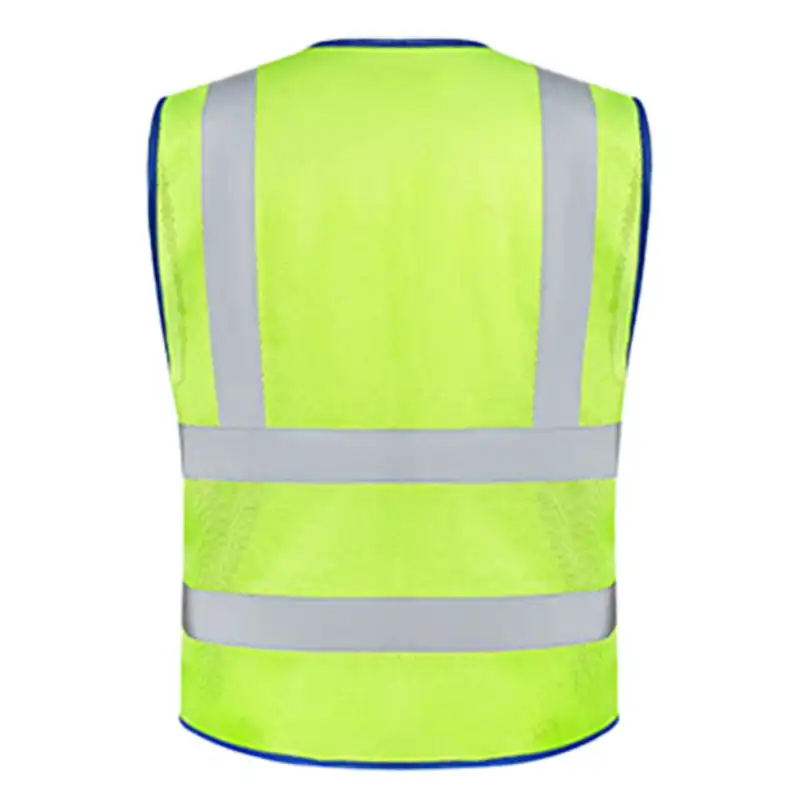
Understanding High-Visibility Vests: Safety Standards and Technical Foundations
The engineering behind a Hi-Vis Vest is based on two different optical concepts that work together to keep workers safe. Fluorescence changes UV light into visible colors, making workers stand out against complex backgrounds during the day. Retroreflective materials using micro-prismatic technology send light sources straight back toward their origin, enabling night visibility. These technical qualities address low-light detection delays and visual clutter in busy construction zones.
ANSI/ISEA Standards for North American Markets
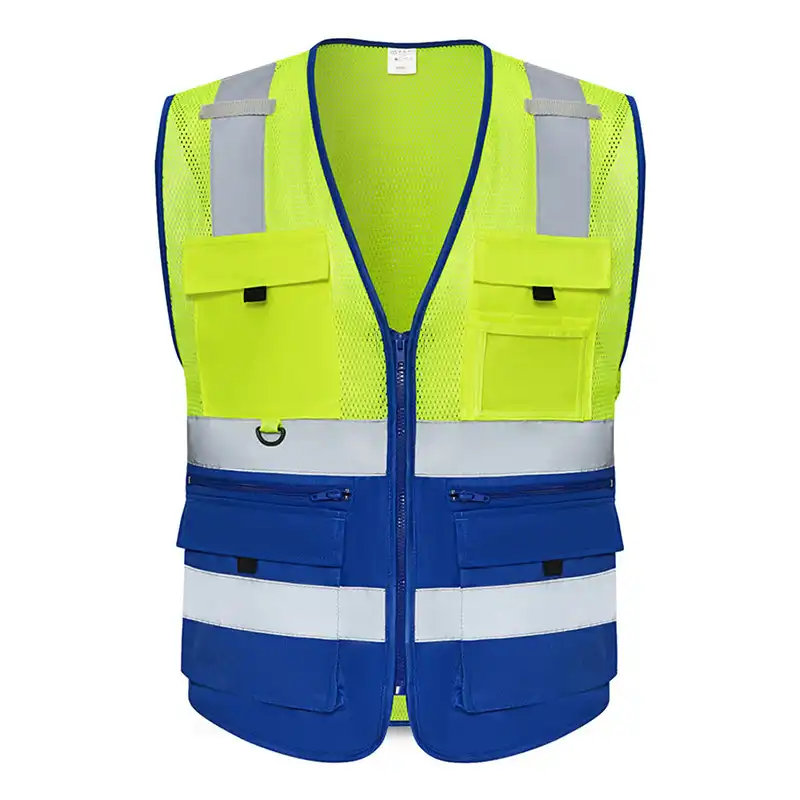
North American procurement workers must prioritize ANSI/ISEA 107-2020 compliance for high-visibility safety clothing. Class 1 vests suit low-risk areas under 25 mph with 155 square inches background material. Class 2 requires 775 square inches fabric and 201 square inches reflective tape for parking lots and factories up to 50 mph. Class 3 needs 1,240 square inches with sleeved patterns for highway construction.
Material Science and Durability Considerations
Professional high-visibility jackets use 100% polyester tricot or breathable mesh, balancing visibility with worker comfort. Fluorescent materials undergo chromaticity tests ensuring color coordinates meet luminance factors after simulated sunlight aging. Welston, with 27 years workwear manufacturing experience, uses colorfast technologies maintaining true colors through 25-50 wash cycles. Reflective tape must achieve retroreflection exceeding 330 cd/(lx·m²) for consistent visibility.
Selecting the Appropriate Hi-Vis Vest for Diverse Business Applications
To make sure that both regulations are followed and workers are happy with the vests, procurement choices need to carefully match the vest's specifications to the real working conditions. Companies in North America in the building, transportation, hospitality, and professional sectors all have unique problems when it comes to getting their teams the right high-visibility safety gear.
Industry-Specific Requirements and Functional Features
Class 3 Hi-Vis Vest high-visibility vests with extra-durable features like strengthened stitching and tear-resistant fabrics are needed on construction sites where workers will be touching rough materials and heavy tools. In warehouses, tear-away vests with five-point breakaway construction at the shoulders, sides, and front openings are useful because they keep clothes from getting tangled up in machinery or transport systems, which keeps people from getting crushed. Companies that need parking attendants, security guards, or event staff to be seen usually ask for Class 2 vests that look professional, can be adjusted in size with hook-and-loop closures, and have places to put logos without taking away from the needed fluorescent surface area.
Climate Adaptability and Ergonomic Considerations
The variety of climates in North America means that vests need to be carefully chosen based on area conditions and yearly changes. Mesh constructions that let air move are good for humid southern states and the summer months, because they keep workers from getting too hot during 8–12-hour shifts. Solid polyester materials don't get caught in the wind in colder areas and Northern climes while still meeting visibility standards. The old trade-off between safety and comfort has been fixed in modern ergonomic designs by tailored fits that allow the body to move naturally, keeping the vest from bunching up or riding up when bending, lifting, or reaching. Welston's manufacturing skills include adjustable waist straps and side elastic strips that make sure clothes fit correctly on a wide range of body types. This is very important for companies that have big uniform programs with a diverse workforce.
Customization Options for Brand Identity and Safety Messaging
In addition to basic compliance, strategic sourcing can use high-visibility uniforms as a way to promote the company's brand and improve safety communication. Screen printing, heat transfer, and stitching can be used to add logos, department names, and safety messages to vests without changing their classification. But customization needs technical know-how—decorative elements can't make gaps in the horizontal consistency of reflective tape that are more than 50 mm wide, and the total logo area can't cut down on fluorescent background material below the minimum square inch standards for the garment's ANSI class. When planning a customization, reputable makers offer technical advice to make sure that both aesthetic goals and regulatory compliance are met. This is especially important for business and hospitality uniform programs, where both safety functionality and professional appearance are important.
Navigating the Hi-Vis Vest Supply Chain: Manufacturer Selection and Procurement Strategy
For bulk buying programs to work, they need to find manufacturing partners whose quality, production capacity, and customer service are uniform throughout the entire procurement lifecycle.
Evaluating Manufacturing Capabilities and Quality Assurance
Welston is a good example of the kind of industrial infrastructure that is needed to make Hi-Vis Vests reliably. The company has three workshops with more than five hundred workers and ten production lines. It also keeps up-to-date cutting, sewing, and finishing tools from Japan's JUKI and Taiwan's SHINLING. Screen printing, water-based glue, and heat transfer production lines that work together let you make a lot of changes without having to wait for outsourcing. As part of quality control, portable retroreflectometers should be used to test the retroreflective performance of tapes to make sure they are always the same brightness. The background material area should also be calculated to make sure it fits the declared classification, and the wash cycle should be validated to make sure the colors stay true and the reflectivity stays high through the claimed laundering limits. Manufacturers who provide third-party testing paperwork and keep quality review processes open are good for procurement teams.
Minimum Order Quantities and Flexible Procurement Terms
B2B buyers like it when makers set reasonable 100-piece minimum order requirements that match real deployment needs instead of making them spend too much in inventory. The 100-piece minimum order requirement from Welston works for medium-sized businesses and lets bigger companies try out goods before making big purchases. Flexible payment terms make it easier on the budget during the early stages of buying while building long-term relationships with suppliers. Smart buying strategies include negotiating bulk discounts based on annual volume commitments instead of single-order quantities. This way, you can get good prices while keeping your inventory flexible by delivering items in stages that fit the needs of a growing workforce, changing seasonal demand, or rolling out products at multiple sites at the same time.
Logistical Coordination and Supply Chain Reliability
Geographical factors have a big effect on buying delays and total cost analyses. Manufacturing in Shenzhen takes advantage of China's well-established transportation infrastructure to serve markets in Asia, Europe, and the United States with reliable service. Welston's relationships with big companies like Panasonic, Benz, Dell, Toshiba, and Toyota show that it can meet the tight delivery deadlines and high quality standards that come with global supply chains. Professionals in procurement should look at a manufacturer's shipping options, consistent lead times, and responsive communication protocols. For example, Welston's promise to respond to customer requests within 24 hours reflects the urgency that often comes with needing safety equipment for new projects, replacing damaged inventory, or keeping up with regulatory changes.
Emerging Technologies and Future Trajectory in High-Visibility Safety Apparel
The Hi-Vis Vest business keeps growing thanks to new materials, the addition of smart technology, and efforts to be more environmentally friendly. These changes are redefining what traditional safety clothing can do.
Smart Textile Integration and Enhanced Visibility Technologies
High-visibility jackets with built-in LEDs are a big step forward from passive fluorescence and retroreflection because they have active lighting parts that work without external light sources. Battery-powered LED strips inserted in reflective tape or vest edges allow for 360-degree vision in total darkness. This is especially helpful for first responders, road workers working at night, and security guards. Some advanced designs use photoluminescent materials that take in ambient light and keep glowing for hours after the light source is turned off. This makes backup systems for visibility in case the main fluorescence or reflective elements stop working. Because Welston can do things like heat transfer and specialized material handling as part of its production, the company is ready to use these new technologies as soon as the market demands it and the products can handle it.
Sustainability Initiatives and Extended Product Lifecycles
As businesses try to find a balance between safety needs and sustainability goals, environmental duty plays a bigger role in their buying choices. Recycling polyester fabrics made from used plastic bottles now have the same performance as new materials while having less of an effect on the earth. Manufacturers are making products last longer by using better colorfast technologies and stronger building methods that keep up with higher wash cycles, which means that products don't need to be replaced as often and there is less waste. Proper maintenance education is very important. So, procurement teams should set up training programs that cover the right way to wash clothes, store them so that they don't get UV exposure during off-shifts, and do regular inspections to find early signs of wear before complete failure to comply forces an emergency replacement.
Regulatory Evolution and Proactive Compliance Strategies
Procurement pros can protect their investments in safety clothing for the future by anticipating changes to regulations. This way, they don't have to buy new clothes every time the standards change. ANSI/ISEA groups review performance standards on a regular basis based on accident data, new developments in material science, and feedback from the industry. Changes are usually announced 18 to 24 months before they are required to be put into effect. Building partnerships with makers that keep an eye on changes to regulations and offer proactive advice can help businesses easily handle compliance updates. Welston has been specializing in professional clothing for 27 years, which has given them the knowledge to spot regulatory trends and predict changes in the market, which goes beyond just providing products.
Maintenance Best Practices: Maximizing Hi-Vis Vest Performance and Investment Return
Following the right care instructions has a direct effect on how well Hi-Vis Vests work, how compliant they are, and the total cost of ownership over multiple buying cycles.
Laundering Procedures and Performance Preservation
The care instructions on the package from the manufacturer are very important for keeping the bright and retroreflective qualities after many cleanings. When bright dyes and glue systems that stick reflective tape together are washed in industrial washing machines that don't use bleach or fabric softeners, the chemicals that break them down are stopped. Water temperatures shouldn't go above what the maker recommends, which is usually 140°F (60°C), so that heat-induced shrinkage doesn't go over the 3% limits for dimensional stability and reflective parts don't come apart. Commercial dryers that use high heat damage materials more than air drying or low-temperature tumble drying. Setting up specific laundry processes that separate high-visibility clothing from general clothes is helpful for companies that have a lot of vests. This keeps harsh chemicals or abrasive materials from getting on the vests and speeding up their wear and tear.
Inspection Protocols and Replacement Indicators
Visual checks done on a regular basis can find performance problems before they become safety gaps when full compliance fails. Fogged-up bright material that looks "washed-out" doesn't provide the needed daily contrast, no matter how many times it has been washed. When tested with a retroreflectometer, reflective tape that scores less than 100 candelas per lux per square meter does not meet the basic performance standards. Damage to the jackets, such as tears in the bright background, reflective tape that comes off, or seams that aren't sewn together properly, means they can't be used anymore. Procurement teams should set inspection schedules—monthly for high-use areas and quarterly for mild deployment—and keep a collection of replacement garments so that they can be quickly swapped out when garments fail inspection standards. This way, non-compliant equipment is not used for too long.
Conclusion
Hi-Vis Vests are still very important for safety at work in all North American businesses. They are changing with new technology while still doing their main job of protecting. To make procurement go smoothly, you need to find a balance between technical compliance with ANSI/ISEA standards, practical concerns like adaptability to temperature and worker comfort, and strategic source selection that favors makers with proven production capacity and responsive customer service. Welston is a great company to work with if you need Hi-Vis Vests that save workers and helps your business run more efficiently and build your brand. The company can create the clothing, make it exactly what you need, and deliver it on time.
FAQ
1. What distinguishes ANSI Class 2 from Class 3 Hi-Vis Vest specifications?
Class 2 jackets need 775 square inches of bright background material and 201 square inches of reflective tape. They can be used in places where traffic goes 50 miles per hour. Class 3 requires 1,240 square inches of background cloth and full-body shape definition through sleeved construction. This is necessary for roads with speeds over 50 miles per hour. Class 3 clothing has more material coverage, which makes it easier to see people moving, which is very important for road repair and building zones.
2. Can we add company logos to Hi-Vis Vest without affecting safety compliance?
Customization is still possible, but only within certain limits. There can't be any horizontal breaks in the reflective tape that are bigger than 50 mm, and the total decorative area can't take away more than the minimum square inch of bright background material needed for the vest's classified performance class. Welston offers technical advice during the planning stages of customization to make sure that logo elements add to the professional look while still meeting all ANSI/ISEA 107-2020 requirements.
3. How frequently should high-visibility vests be replaced?
Instead of having set dates, replacement varies on how often it is used and how well it is maintained. Most professional vests can be washed 25 to 50 times before they lose their effectiveness. When fluorescent material fades a lot, reflective tape scores below minimum brightness levels, or physical damage weakens the structure of a garment, it needs to be replaced right away. Organizations should set up checking processes to find early signs of wear and keep enough new parts on hand to protect their workers all the time.
Partner with Welston for Your High-Visibility Safety Apparel Needs
When it comes to making Hi-Vis Vests for North American companies that need reliable, legal safety gear, Welston has 27 years of experience. Our three factories and ten production lines use high-tech Japanese and Taiwanese equipment to make sure the quality is always the same. We can handle big orders starting at 100 pieces and offer a wide range of customization options, such as printing logos and changing sizes. We provide durable Hi-Vis Vests that meet ANSI/ISEA standards and make workers more comfortable and professional-looking. These vests are used in a wide range of industries, from building and shipping to restaurants and business uniform programs. When you ask about purchasing, have technical questions, or need to coordinate an order, our customer service team will get back to you within 24 hours. Get in touch with [email protected] right away to talk about your unique needs, ask for product samples, or look into your options for buying in bulk.
References
1. American National Standards Institute. (2020). ANSI/ISEA 107-2020: American National Standard for High-Visibility Safety Apparel and Accessories. International Safety Equipment Association.
2. Sayer, J.R. & Buonarosa, M.L. (2018). The Effects of High-Visibility Safety Apparel on Pedestrian Conspicuity. Transportation Research Institute, University of Michigan.
3. Occupational Safety and Health Administration. (2022). Personal Protective Equipment Standards for Construction Industry. U.S. Department of Labor.
4. National Institute for Occupational Safety and Health. (2021). Preventing Worker Deaths from Being Struck by Vehicles at Highway Construction Sites. Centers for Disease Control and Prevention.
5. European Committee for Standardization. (2019). EN ISO 20471: High-Visibility Clothing—Test Methods and Requirements. International Organization for Standardization.
6. Canadian Standards Association. (2020). CSA Z96-15: High-Visibility Safety Apparel Performance Specifications. Canadian Standards Association Group.
We specialize in designing, producing, and selling corporate clothing. Mainly produces: industrial clothing, business uniforms, and work clothes for different companies.

About Welston Garments


