Which High-Visibilty Safety Vest Works Best for Your Job Site
The right High-Visibility Safety Vest for you will depend on the conditions of the job site, the amount of traffic you will be facing, and any legal requirements that you need to follow. Class 2 vests work well for warehouse operations and low-traffic areas, while Class 3 vests with sleeves provide maximum protection for roadway construction and high-traffic zones. The best choice strikes a mix between functional needs like breathability, durability, and the ability to be customized with standards like ANSI/ISEA 107. Knowing these differences helps people who work in procurement find safety gear for workers that meets price and practical goals while also staying within the budget.
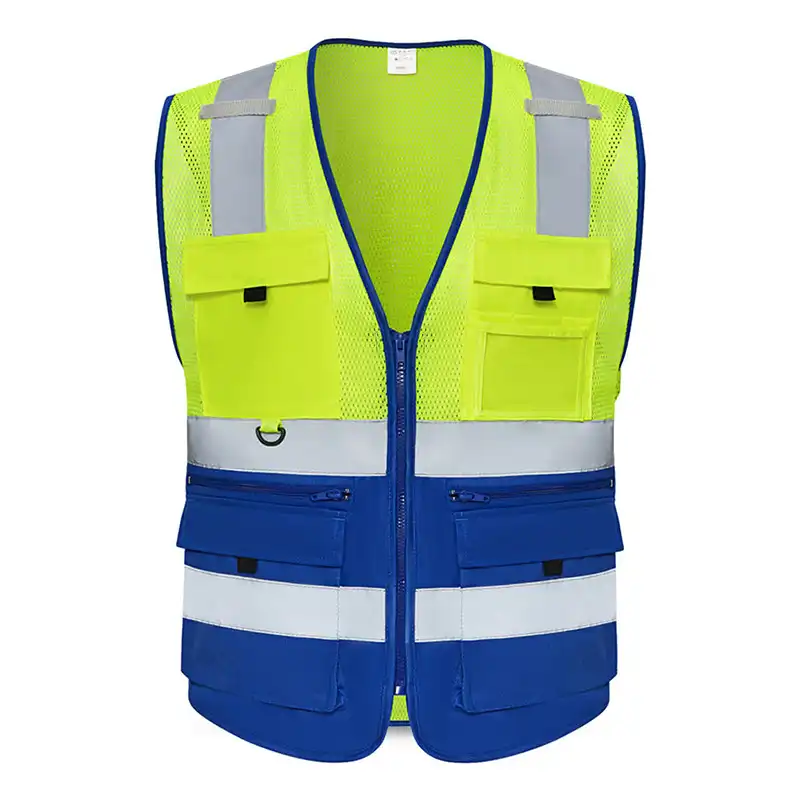
Understanding High-Visibility Safety Vests and Their Role on Job Sites
High-Visibility Safety Vests are an important piece of personal safety equipment that makes workers quickly visible in dangerous places. The bright background materials and retroreflective tape on these clothes work together to make a dual-visibility system that works well in a range of lighting situations. During the day, the fluorescent cloth stands out against industrial settings because of its bright colors. When it gets dark or there isn't much light, the retroreflective parts send light back to where it came from, like car headlights, warning operators from far away that a worker is there.
These High-Visibility Safety Vests are important for more than just being seen. They solve an important problem with workplace safety: being hit by an object is still one of the main ways people die on the job in the building, logistics, and road repair industries. When made correctly, High-Visibility Safety Vests make workers more visible, which gives machine operators and drivers more time to respond, which could help avoid terrible accidents.
Compliance with International Safety Standards
It's not up to chance that High-Visibility Safety Vests work. Their design and function are governed by strict worldwide standards. ANSI/ISEA 107-2020 sets up three performance classes in North America. These classes are based on the amount of visible material and the level of danger in the work setting. In Europe, High-Visibility Safety Vests are categorized by EN ISO 20471, which does the same thing with visible area and retroreflective performance.
These guidelines spell out exact requirements for the amount of background material, where to put the shiny tape, and how well it works photometrically. A High-Visibility Safety Vest that meets the standards must be visible from at least 1,280 feet away, so that workers can still be recognized as people and not as static objects. If a procurement professional knows about these regulatory systems, they can make sure that safety rules are followed along with operating needs. This keeps workers and companies safe from liability and meets legal requirements in different markets.
With more than 20 years of experience in manufacturing, Welston is in a good position to know how these standards can be used to build useful clothes. Our three factories all have quality control methods that make sure that every production batch meets the standards. This way, security is always the same, no matter how many orders are placed.
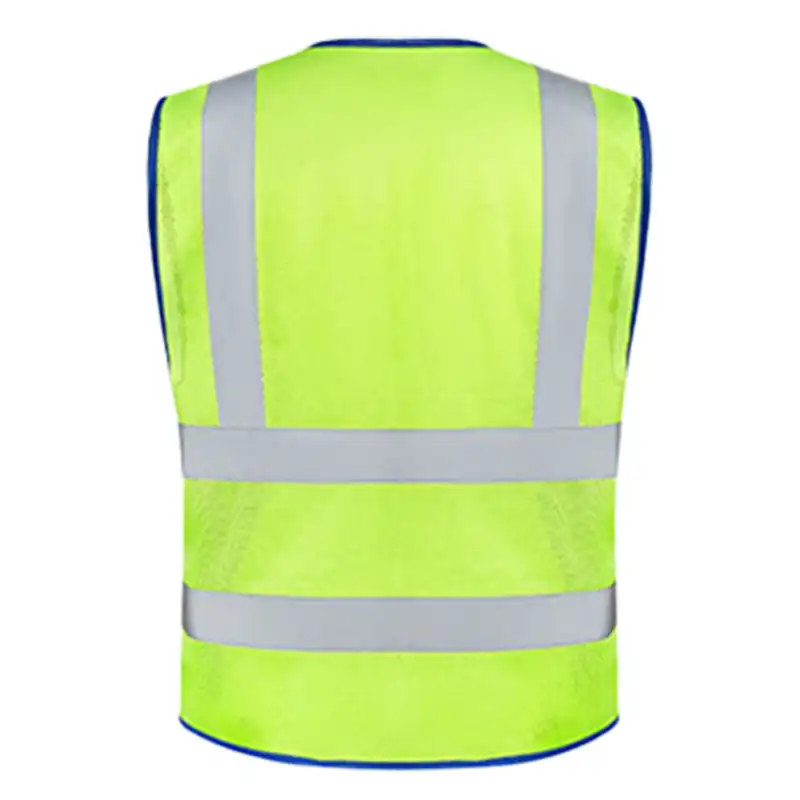
Types and Features of High-Visibility Safety Vests: Choosing Based on Job Site Needs
To choose the right High-Visibility Safety Vests, you need to know about rating methods and specific features. The amount of danger in the workplace and the need for visibility are closely related to the classification system.
Class Distinctions and Applications
Class 1 High-Visibility Safety Vests have the bare minimum of exposed material, which is about 155 square inches of background cloth and 155 square inches of retroreflective tape. These are good for low-risk areas with traffic speeds of up to 25 mph, like parking lot guards or warehouse workers who need to work away from cars.
Class 2 High-Visibility Safety Vests make it much easier to see because they have 775 square inches of background cloth and 201 square inches of reflective tape. This category includes places with traffic going up to 50 miles per hour or more complicated views, like work zones on the side of the road during the day and airport ground teams.
With 1,240 square inches of background cloth and 310 square inches of retroreflective tape, Class 3 High-Visibility Safety Vests make wearers as visible as possible. For this job, arms are usually needed to make a full body silhouette, which helps workers be seen even when they are moving quickly or in a busy visual setting. This level is usually needed by people who work on highways, near roads, or in emergencies.
Material Considerations and Specialized Features
Modern High-Visibility Safety Vests are made of nylon mesh, which is a material that is both strong and breathable. The open structure lets air flow, which lowers heat stress when it's hot outside, which is an important thing to think about for summer building sites in North America. Some companies make solid tricot materials for places that need extra protection from sparks or small particles.
There are different types of reflective tape technology, such as glass bead systems and micro-prismatic patterns. Glass bead tape is a good choice for most situations because it is affordable and works well. With cube corner optics, micro-prismatic tape gives better retroreflection at wider angles, so workers can still be seen even when they're not facing traffic directly.
Practical features make it easier to use on a wide range of job sites. High-Visibility Safety Vests with adjustable side straps can fit people of all body types and can go over big winter clothes, which is very important in cold places in the US and Canada. There are many pockets that make it easy to carry tools, phones, and work papers. Breakaway closures keep people from getting tangled up in places with moving machines by releasing under pressure to avoid pulling accidents.
Welston has screen printing and heat transfer lines for output, which lets customers make a lot of different choices. Our JUKI and SHINLING tools from Japan and Taiwan ensure exact building that keeps the integrity of the materials through many industrial laundering cycles.
How to Choose the Best High-Visibility Safety Vest for Your Job Site
A thorough survey of the job site is the first step in strategic High-Visibility Safety Vest selection. Before making an order, procurement managers should think about a number of important factors.
Sector-Specific Requirements
Class 3 security is needed on construction sites with heavy machinery and car traffic. Sleeved High-Visibility Safety Vests make the whole body outline, which helps operators tell the difference between workers and stationary items during complicated moving tasks. Shoulder and arm reflective bands should go around the body to create what safety experts call "biomotion"—the recognition of human movement patterns that makes people think more quickly.
Usually, Class 2 High-Visibility Safety Vests work well for warehousing and transportation tasks. Forklift traffic moves at fixed speeds, and the lighting stays mostly the same. In this case, breakaway designs are very important because they keep things from getting caught on racking systems and transport equipment.
When working near traffic going over 50 miles per hour, road repair crews need to wear Class 3 High-Visibility Safety Vests. When drivers don't have much time to respond, the longer viewing distance and full body silhouette are very helpful. Some places have rules about what colors can be used—lime yellow-green in some states, orange in others—so buying teams need to check with local authorities.
Evaluation Criteria for Informed Purchasing
Visibility compliance is the most important thing to think about. Check that the High-Visibility Safety Vests have the right certification labels that show they meet ANSI/ISEA 107 standards and have the right class number. High-Visibility Safety Vests that are fake or don't follow the rules may look the same, but they don't meet lighting standards, which puts workers at risk.
Comfort in all areas changes how well workers do their jobs. For warm weather, mesh construction lets air flow, but some workers in mild areas like thick fabric for light rain protection. From working with clients in Asia, Europe, and the United States, we know that climate issues are very different. For example, what works in Arizona might not meet the needs of people in Minnesota.
The cost of ownership is directly related to how long something lasts. The retroreflective properties of industrial-grade High-Visibility Safety Vests stay the same even after being washed many times. After 25 washes, good retroreflective tape should still be at least 80% as bright as the day it was put on. Cheap options wear out quickly and need to be replaced often, which costs more in the long run than buying the right tools in the first place.
There is more to cost-effectiveness than just unit price. When you buy in bulk from well-known companies like Welston, you can save money. Our initial order quantity of 100 pieces works for both small businesses that want to standardize their High-Visibility Safety Vests and big companies that run programs for the whole company. Companies can add names and staff IDs without affecting safety performance when they include customization options.
Comparing Leading Options
Look at the production capabilities and quality assurance methods of High-Visibility Safety Vest suppliers when you are analyzing them. Companies that have more than one factory and specialized production lines show that they are stable and can grow. Welston has three plants with more than 580 workers and 10 production lines. This makes sure that delivery times are always met, even for big orders. Our relationships with companies like Benz, Panasonic, Dell, Toshiba, and Toyota show that we can meet high-quality standards in a wide range of fields.
Certification paperwork proves that promises of agreement are true. Suppliers you can trust will gladly give you test results that prove the photometric performance, colorfastness, and physical stability of their products. After-sales support is very important for business-to-business relationships. Quick contact helps solve problems with sizes, set up reorders, and quickly address any quality issues.
Procurement Best Practices: Ordering High-Visibility Safety Vests for Your Business
Cost-effectiveness and practical success are both improved by effective procurement methods for the High-Visibility Safety Vest. Smart buying choices include more than just comparing unit prices. They also take into account the total value delivered.
Taking Advantage of Wholesale Prices
When you order High-Visibility Safety Vests in bulk, the cost per unit goes down by a lot. Manufacturers use tiered prices to reward customers who make bigger promises. Planning ahead for yearly safety equipment needs and combining orders is one way to save money. When you buy in bulk, you can also use your buying power to get customization choices that would normally cost more.
Customization makes a company's name stronger while still following safety rules. Screen printing or heat transfer application can be used to add company branding, employee names, and organizational names. Welston's in-house customization options make this process easier because you don't have to coordinate with outside decorators, and we make sure that the placement of the name doesn't take away from the needed obvious material areas.
Managing International Supply Chains
When you buy High-Visibility Safety Vests around the world, you have to pay attention to shipping processes and arrival times. Lead times depend on how complicated the order is, how much tailoring is needed, and when the product needs to be made. Standard High-Visibility Safety Vest orders are usually finished between 15 and 25 business days. Customized runs may need more time for approval of artwork and printing setup.
The best shipping methods combine speed and cost. When shipping schedules are flexible, sea freight is a cheap way to send big orders. Even though it costs more, air freight speeds up delivery for pressing needs like restocking or meeting project deadlines. Working with makers who know how to handle foreign logistics makes it easier to deal with customs paperwork and import rules.
Quality assurance methods keep you from getting High-Visibility Safety Vests that aren't up to par. Suppliers with a good reputation check the measurements, colors, and reflecting properties of the goods before sending them out. Welston has quality control methods that test seam strength, colorfastness, and optical accuracy to make sure that every batch meets the standards that have been set.
Building Supplier Partnerships
Long-term ties with High-Visibility Safety Vest suppliers are good for more than just one purchase. When demand is high, production schedules are prioritized when relationships are already in place. When your suppliers know exactly what you need, reordering is easier and less of an administrative load. Our promise to respond 24 hours a day and our committed after-sales staff make sure that buying teams get quick help with questions, changes, or problems.
Different company buying policies can be met by flexible payment terms. Talking about terms during the first round of talks sets clear goals and makes deals go more smoothly. Our experience working with customers in Asia, Europe, and the United States has helped us create flexible payment systems that can be used with a range of budgets.
Maintaining and Maximizing the Lifespan of Your Safety Vests
If you take good care of your High-Visibility Safety Vest, it will last longer and still protect you. To protect your investment, you need to pay attention to when you clean, store, and repair things.
Cleaning Best Practices
Both the fluorescent light's brightness and its ability to bounce light back must be kept up during industrial cleaning of High-Visibility Safety Vests. Use mild soap and wash High-Visibility Safety Vests separately or with other items of the same color. The water shouldn't be warmer than 104°F (40°C), because too much heat breaks down bright dyes. Don't use any fabric softeners at all. They coat retroreflective elements, making them much less able to return light, which could make High-Visibility Safety Vests illegal.
Mechanical drying breaks down materials more than air drying does. When polyester mesh is dried at high temperatures, it can shrink, and retroreflective tape fixings can become damaged. If you have to use a dryer, set it to low heat and take the High-Visibility Safety Vests off while they are still a little damp so they can dry naturally.
Storage and Inspection Protocols
Keep High-Visibility Safety Vests in clean, dry places that are out of direct sunlight. Long-term UV exposure weakens bright materials, making them less visible during the day. Putting things away by hanging them stops the bending that can break retroreflective tape over time.
Regular inspections find High-Visibility Safety Vests that need to be retired. Check to see if the fluorescent fabric is fading. If the bright lime-yellow turns pale yellow or the orange turns pink, it needs to be replaced. Check retroreflective tape for tears, cracks, or separation. Any damage that breaks the consistency of the tape makes it less visible and should be thrown away right away.
Performance testing is a fair way to judge a High-Visibility Safety Vest. To do simple field tests, shine a flashlight at the vest from 50 feet away in the dark. If the light doesn't bounce well, the performance has been lowered. Professional optical testing finds the exact light-return numbers, but most end users still can't use this method.
Replacement Timing
According to industry standards, High-Visibility Safety Vests should be thrown away after 25 industrial wash cycles or six months of heavy use every day, whichever comes first. Environmental factors speed up wear and tear. High-Visibility Safety Vests that are exposed to chemicals, high temperatures, or direct sunlight wear out faster than those that are kept in controlled conditions. Having enough spares on hand keeps things safe when multiple High-Visibility Safety Vests need to be replaced at the same time.
Compliance checks are easier to do with documentation. Tracking when High-Visibility Safety Vests are given out and when they need to be replaced shows that you are taking the time to keep the right PPE. This keeps records that are useful for safety checks and helps fight against claims of responsibility after accidents.
Conclusion
To choose the best High-Visibility Safety Vest, you have to think about how it will work in different situations and how it must meet regulations. Based on traffic exposure and job dangers, the first choice is made based on differences in class. Long-term value goes beyond the initial purchase price and is based on the quality of the materials, how well they bounce light back, and how long the building lasts. When you use strategic buying to get High-Visibility Safety Vests in bulk, make changes, and work with suppliers you already work with, you can save money without lowering safety standards. By extending the service life of High-Visibility Safety Vests without affecting their protective performance, proper upkeep practices increase the returns on investments. Knowing how these factors affect each other helps procurement pros make smart choices that protect workers and make the best use of business budgets on a wide range of North American job sites.
FAQ
1. What differentiates ANSI-compliant from non-compliant safety vests?
High-Visibility Safety Vests that are ANSI-compliant meet guidelines for photometry and colorimetry, which have been confirmed by independent testing. They have stickers on them that say they are certified to meet ANSI/ISEA 107-2020 standards and list the performance class. Non-compliant High-Visibility Safety Vests might look the same, but they don't have any confirmed performance data, so they might not give workers the sight they need at the distances they need to be safe.
2. Can we customize vests with our company branding?
Customization is easy, but the placement of the logo must not take away from the necessary, obvious material areas of the High-Visibility Safety Vest. Logos usually show up on the chest or upper back. Screen printing and heat transfer can handle detailed drawings while still following safety rules. Usually, you have to buy a certain number of items before you can customize them. Welston's 100-piece minimum makes customization possible for businesses of all kinds.
3. How do I select vests for extreme weather conditions?
In cold places, High-Visibility Safety Vests need to be able to fit over heated clothing. This means that sizes need to be able to be adjusted and the High-Visibility Safety Vests may need to be bigger. Mesh design is still good for High-Visibility Safety Vests because they can be worn over other clothes. For better airflow in hot places, full mesh covering is best. Some sellers offer treatments that remove wetness from the skin, which makes the clothes more comfortable to wear for long periods of time in humid areas of the southern United States.
Partner with Welston for Premium Safety Vest Solutions
Welston can help you buy High-Visibility Safety Vests because they have been making clothes professionally for 26 years. With three plants and ten dedicated production lines, we can reliably handle orders from as few as 100 pieces to large-scale operations for businesses. Companies around the world, like Panasonic, Benz, and Toyota, believe in us because we have strict quality control standards. Our High-Visibility Safety Vest source offers full customization through in-house screen printing and heat transfer facilities, which lets brands fit in perfectly without breaking ANSI rules. Email Julia at [email protected] to talk about your particular needs. We get back to you within 24 hours with useful solutions that are based on your operational needs, price, and shipping schedules.
References
1. American National Standards Institute. (2020). ANSI/ISEA 107-2020: American National Standard for High-Visibility Safety Apparel and Accessories. International Safety Equipment Association.
2. European Committee for Standardization. (2013). EN ISO 20471:2013 High-visibility clothing - Test methods and requirements. International Organization for Standardization.
3. Bureau of Labor Statistics. (2022). Census of Fatal Occupational Injuries: Transportation incidents and struck-by accidents in construction sectors. U.S. Department of Labor.
4. National Institute for Occupational Safety and Health. (2021). Personal Protective Equipment for Construction: Selection and Use Guidelines. Centers for Disease Control and Prevention.
5. Sayer, J.R., & Buonarosa, M.L. (2018). The Effects of High-Visibility Safety Apparel on Driver Behavior in Nighttime Work Zones. Transportation Research Record: Journal of the Transportation Research Board.
6. American Society for Testing and Materials. (2019). ASTM F1506-19: Standard Performance Specification for Flame Resistant and Electric Arc Rated Protective Clothing Worn by Workers Exposed to Flames and Electric Arcs. ASTM International.
We specialize in designing, producing, and selling corporate clothing. Mainly produces: industrial clothing, business uniforms, and work clothes for different companies.

About Welston Garments


